
Tinnitus - Frequency Play...
Beginning the Analytics

Over the last couple of days, I’ve taken some time to refocus on frequencies - experimenting with binaural beats and exploring what I like to call the Sound of Silence.
Earlier this year, I’d managed to quiet the ringing in my ear for a while - through the use of binaural beats. Now, by concentrating on how directed frequencies, I’ve been able to replicate that success a few more times.
And it’s been AWESOME!
What most of us don’t realize is how much we’re influenced - even controlled - by external inputs like light and sound. Both are constantly shaping our moods, energy levels, and mental clarity.
You’ve probably read about circadian rhythms - your internal clock that regulates sleep and alertness, guided by sunlight.
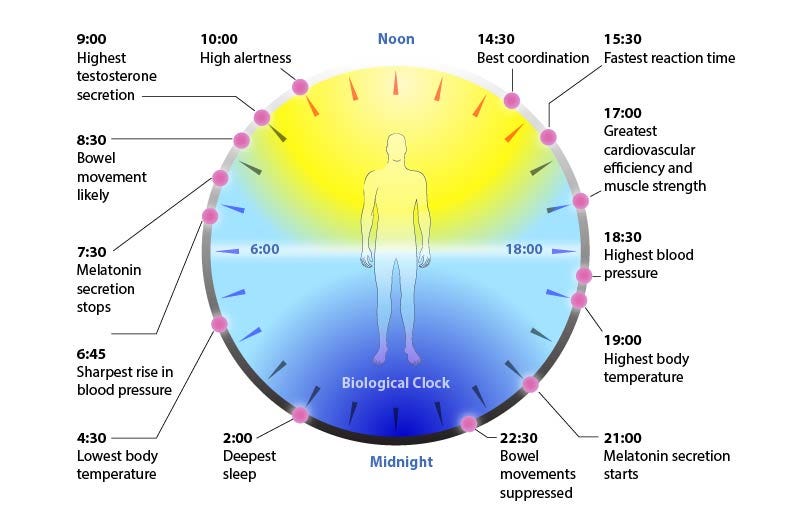
Or maybe you’ve heard of SAD (Seasonal Affective Disorder), the dip in mood that happens during darker, colder months when we don’t get enough exposure to the sun’s light and warmth.
The sun, after all, does have a frequency - ranging roughly between 430 and 770 terahertz. Though we can’t hear it, it’s still part of the natural symphony that our bodies respond to. (Yes, yes… Vitamin D too, but that’s another conversation.)
Sound works the same way. Its frequencies act on us in ways most people never notice. Beyond the obvious startle of a loud noise or the comfort of a favorite song, there’s an entire spectrum of vibration influencing how we feel, focus, and function.
When we learn to tune into it and use it deliberately, we can start to shift from being passive receivers of the world’s noise to active conductors of our own inner harmony.
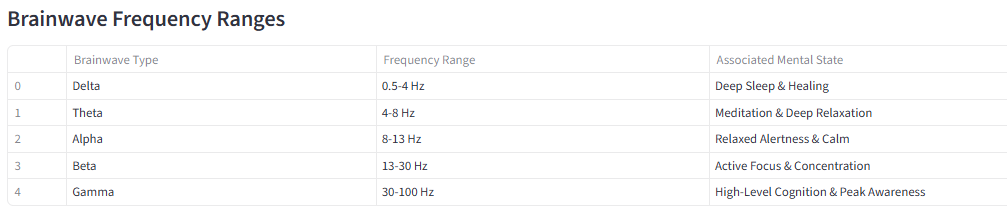
Expanding my understanding has meant diving into studies on the intentional effects of music - not only its audible elements, but the internal pulse that influences our emotional balance.
An interesting and fun - N=1 experiment.
What I’m starting off with is an app that shows the most common frequencies of some of the tunes I like to listen to…but also detects if there is a binaural beat that is playing beyond our immediate comprehension - to strengthen the impact of the sounds.
Check it:
Give this song a listen to…
And here’s what my app detected:
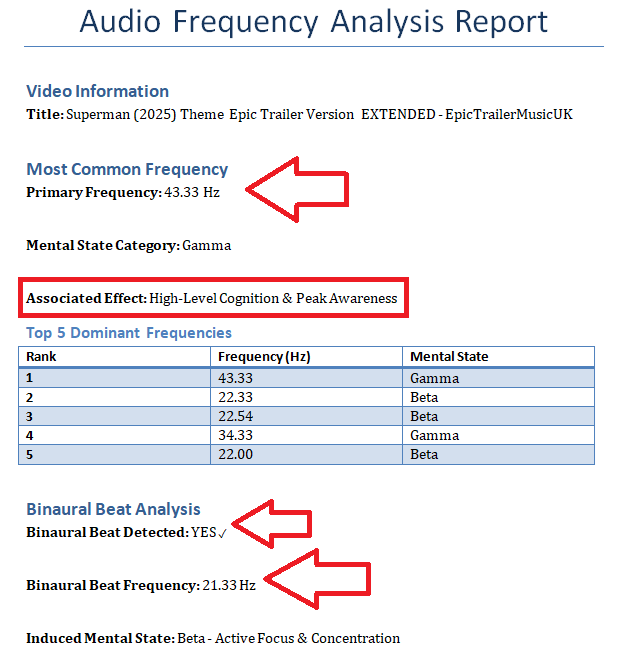
If you’re a fan of Superman and liked this remake of the music trailer, you’ve probably felt something powerful stirring beneath the surface. The external soundscape alone stimulates high-level cognition and peak awareness.
The binaural beat embedded in the mix falls within the Beta range, the frequency associated with active focus and concentration.
Together, these elements - at least in theory - create a synergistic effect: heightened alertness paired with faster cognitive processing. Of course, results vary from person to person, depending on factors like listening duration, volume, and individual sensitivity.
Has this been the cure for my tinnitus?
No.
But it’s another step forward in understanding how frequencies interact with the mind and body.
What has made a difference is experimenting with a carefully selected range of frequencies, layered beneath the music, essentially creating a personalized resonance that helps quiet the noise within.
There’s a lot more to uncover here. With a couple of custom apps I’ve built and a bit more time to listen, test, and learn, I’m hoping to share some fascinating discoveries soon and then even invite you into the process, if you’re interested.
In the meantime, if you’ve got a favorite song you’d like me to break down, drop it in the comments. As time allows, I’ll run it through my analytics and see what frequencies are really at play.
Knights in white satin by the Moody Blues closely followed by Tchaikovsky's 1812 overture.
Interesting article.
Well done
What is that app you are using?